

Got an HND or 2:2? You may still qualify for a Master’s in Ireland. Discover Ireland universities that accept HND, admission pathways, fees, IELTS options and scholarships.
Short answer? Almost never — directly, that is.
And honestly, that’s where most people waste money. They apply straight for a master’s with an HND. Get rejected. Then conclude Ireland doesn’t want them.
That’s not what happened.
What happened is they skipped a step. Ireland’s system is built on levels, HND sits one level below what most master’s programmes ask for, and there’s a real, working bridge in between. It’s a well-established route — Technological Universities build it into their standard admissions structure. Let’s show you exactly how.
💡 Quick Answer
An HND won’t get you into an Irish master’s directly in most cases — you’ll almost always need a Level 8 bridge year first.
| Your Qualification | Can You Apply for a Master’s? | Typical Route |
|---|---|---|
| HND / Level 7 Ordinary Degree | Rarely direct — usually needs a bridge | Level 8 add-on year, then master’s |
| Honours Degree, 2:1 or better | Yes, standard application | Direct application |
| Honours Degree, 2:2 (Lower Credit) | Yes | Direct application, narrower school choice |
| Honours Degree, Third Class | Yes, with more effort | Direct application, lean on personal statement + experience |
| HND + 5 years relevant work experience | Sometimes, case-by-case | MBA or professional programmes with experience waivers |
Best Route by Qualification
| If you have… | Best next step |
|---|---|
| HND | Apply for a Level 8 add-on year at a Technological University |
| HND + 5 years experience | Check MBA or professional master’s entry with an experience waiver |
| 2:2 Honours Degree | Apply directly |
| Third Class | Target programmes that state they use holistic review |
Which Master’s in Ireland with HND path applies to you?
YES ↓ Check MBA / professional master’s entry with an experience waiver | NO ↓ Apply for a Level 8 add-on year ↓ Receive Honours Degree ↓ Apply for the Master’s, same as anyone else |
If You’re Reading This With an HND, 2;2 Don’t Panic
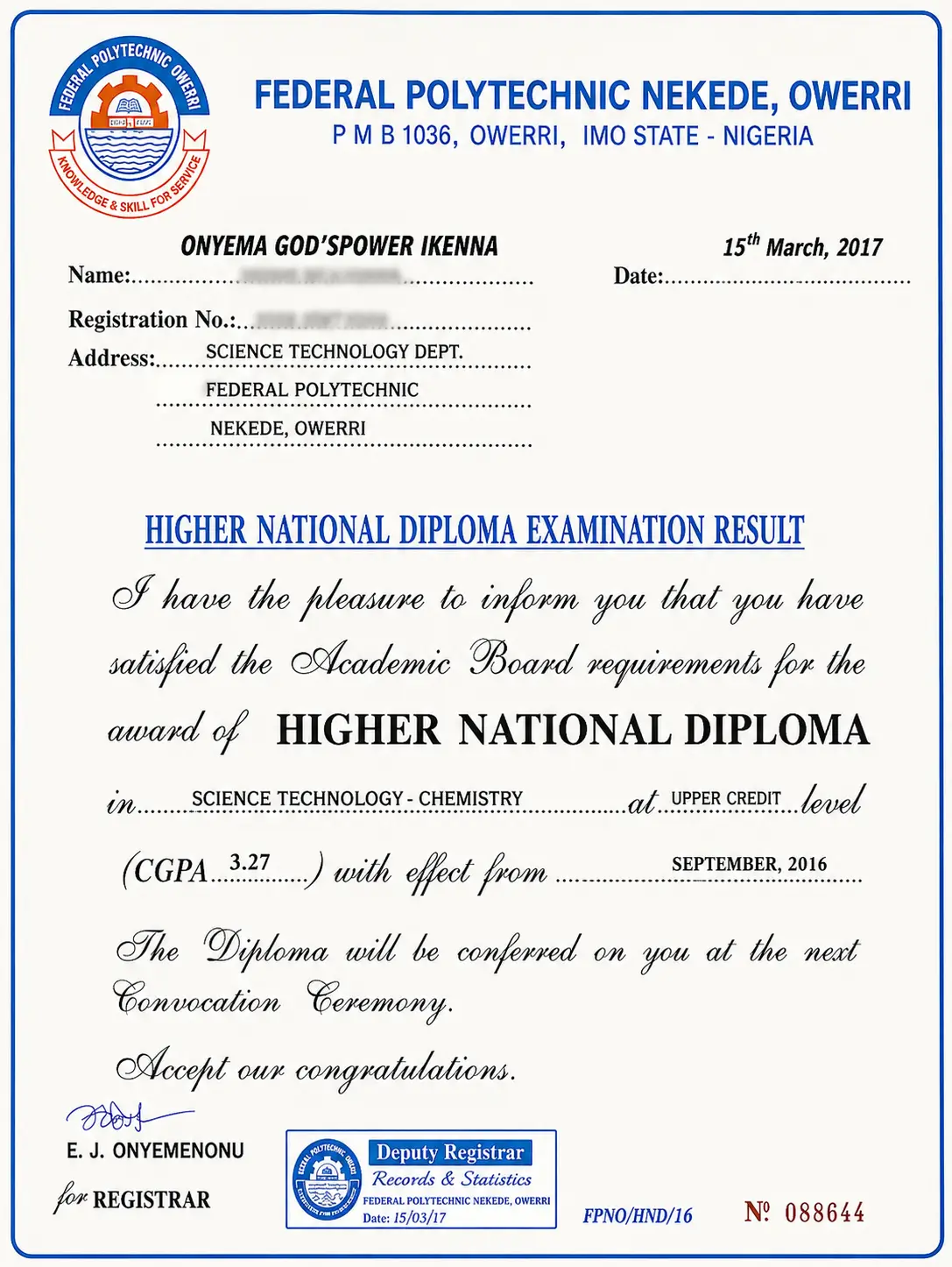
Seriously. You’re not finished. Your route is just slightly different from someone holding a full honours degree.
We know what’s actually going on in your head right now: did I waste three years doing this HND for nothing? No, you didn’t. You just need one more step before the master’s step. That’s it.
“One extra year is better than giving up on your dream.”
Why WE Won’t Hand You a Fake “Ireland Universities for HND Holders” List
If you’ve searched this before, you’ve seen those articles. A neat table, university names, ticks and crosses, no source in sight.
We checked. Irish universities’ own admissions pages — not blogs, the schools themselves — say a taught master’s is normally built for people who already hold an honours degree (Level 8). HND sits at Level 7. That’s stated plainly on institutions like TU Dublin’s own postgraduate pages.
We’ve lost count of how many Facebook and WhatsApp group comments say “my friend got admitted with just an HND.” Maybe he did. But nobody asks the follow-up question: which programme, which year, and did he quietly do a top-up first? Usually, that’s exactly what happened.
So instead of a table that gets you rejected and out of pocket on application fees, here’s what genuinely works.
We get why this is frustrating. Everyone seems to have a different answer. One blog says yes. Another says no. Someone on Facebook swears their cousin got in with just an HND. Here’s the thing: all three can be true at once, depending on the course, the year, and the specific university. That’s exactly why we’re focusing on admission rules instead of rumours from here on.
How Ireland’s Qualification Levels Actually Work
- Level 6 – Higher Certificate (about 2 years)
- Level 7 – Ordinary Bachelor’s Degree / HND (about 3 years)
- Level 8 – Honours Bachelor’s Degree (usually 4 years)
- Level 9 – Master’s Degree
- Level 10 – Doctorate
That’s it. That’s the whole confusion in five lines. HND = Level 7. Most master’s programmes want Level 8. One level gap. That gap is the entire reason “add-on years” exist in Irish higher education.
⚠ Reality Check
If a website claims “Master’s in Ireland with 2:2 or University X accepts HND directly for all Master’s programmes,” be cautious. Irish universities usually require a Level 8 Honours Degree for taught Master’s programmes. Some programmes may consider exceptional applicants with relevant experience, but that’s the exception, not the rule.
What Is HND Equivalent to in Ireland?
An HND is treated as equivalent to an Irish Level 7 Ordinary Bachelor’s Degree. Not a Higher Certificate (that’s Level 6, lower), and not an Honours Degree (Level 8, higher). Right in the middle. This single fact explains almost every admissions decision you’ll run into.
Can HND Holders Do a Master’s in Ireland Directly?
Rarely.
Programmes that say they review non-standard applicants individually, plus a strong case built on work experience, can sometimes make an exception. But “sometimes” isn’t a plan. Here are the three routes people actually use.
1. The Level 8 Add-On / Top-Up Year
This is the big one for anyone looking for Ireland universities that accept HND. Several Technological Universities in Ireland that accept international students run a one-year add-on that turns your Level 7 (your HND) into a full Level 8 Honours Degree. Once you have that, you apply for a master’s like anyone else — no asterisk next to your name.
TU Dublin and South East Technological University (SETU) both confirm this kind of route on their own admissions pages: SETU explicitly considers Level 7 Ordinary Degree holders for direct entry into the third (final) year of a related Level 8 Honours Degree. Other Technological Universities — Munster TU, Atlantic TU, and TUS — generally run similar advanced-entry systems, since it’s a structural feature of the whole TU sector, not a one-off policy. Always confirm the exact course, though; it varies year to year and by subject.
🎯 Editor’s Advice
Personally? we’d rather spend one extra year getting a real, recognised Level 8 than gamble application fees hoping an admissions committee makes an exception for me.
2. The Postgraduate Diploma Bridge
Some institutions run a Postgraduate Diploma that technically sits at Level 9 but has a softer entry bar than the full master’s. SETU says it directly: in certain circumstances, entry to a taught postgraduate programme can be considered for holders of Ordinary (Level 7) Bachelor’s Degrees, not just Honours holders. Finish the diploma well, and many programmes let you roll straight into the master’s year without reapplying from scratch.
3. The Work-Experience Waiver
For MBAs and some executive or professional master’s programmes, five or more years of solid, relevant work experience can get a committee to look past the Level 7/8 gap. This is never guaranteed, and it’s programme-specific. You make the case yourself, in your personal statement — don’t assume it’ll be assumed for you.
Ireland Universities that Accept HND offering Progression Routes for HND Holders
| Institution | What They Offer HND/Level 7 Holders | Confirmed On Their Own Pages? |
|---|---|---|
| TU Dublin | Postgraduate conversion routes; Level 8 progression structure | Yes |
| SETU (South East Technological University) | Advanced entry to final year of Level 8 Honours; case-by-case PG Diploma entry for Level 7 holders | Yes |
| Munster TU, Atlantic TU, TUS | Typically similar add-on/advanced-entry structures | Check current course pages — TU-wide pattern, not university-specific confirmation |
| Trinity, UCD, UCC, University of Galway, DCU, Maynooth, UL | Standard entry — expects Level 8 Honours going in | Yes |
Notice the pattern: it’s not that these schools “accept HND for a Master’s in Ireland with third class.” It’s that the Technological University sector, as a category, builds in a Level 7 → Level 8 bridge as a normal part of how their system works. That’s a structural fact about Ireland Universities for HND holders, not a marketing claim about one school.
💰 Save Your Money
Admission requirements change more often than people realise. Even if someone got in with an HND route last year, don’t assume the exact same path exists today. Always verify current requirements with the admissions office before paying an application fee.
Masters in Ireland with a 2:2 (Lower Credit)?
Yes. A 2:2 already clears the Level 8 requirement — the concern for admissions at that point is your grade, not your qualification type. You’re in a genuinely better position than an HND holder here.
Your options narrow at the most competitive programmes (think Trinity, UCD, high-demand Computer Science or Business courses), but plenty of solid programmes, especially at Technological Universities, weigh your personal statement and experience alongside the grade.
Can Third Class Apply?
Yes — apply. Don’t talk yourself out of it before you’ve even tried.
But be realistic: a Third Class narrows your list further than a 2:2 does. Highly competitive programmes will likely say no. Less oversubscribed programmes, and ones that explicitly mention holistic review, are where your personal statement, references, and work experience actually earn their keep.
If we had a Third Class today, we wouldn’t spend our first application on the most competitive programme in my field. we’d start with a school known for reviewing the whole applicants looking for Master’s in Ireland with third class, get an offer, and build from there.
Which Type of School Is More Flexible?
| Institution Type | Examples | General Style |
|---|---|---|
| Traditional Universities | Trinity, UCD, UCC, University of Galway, DCU, Maynooth, UL | Sticks closely to published entry criteria; less room to negotiate on qualification level |
| Technological Universities & Institutes of Technology | TU Dublin, SETU, MTU, ATU, TUS | More likely to run add-on years, conversion diplomas, and case-by-case review |
Neither type is “better.” It’s about fit. Want the fastest realistic path from HND to master’s? The TU sector generally gives you more doors. Want a specific research group or a big-name qualification? A traditional university might still be worth the extra bridge year first.
Do You Need IELTS?
| English Requirement | Accepted? |
|---|---|
| IELTS | Yes, almost always accepted |
| Prior education fully taught in English | Sometimes accepted as proof instead — varies by institution |
| Duolingo English Test | Accepted by some programmes, not all |
| PTE Academic | Accepted by some programmes, not all |
| No English test at all | Rare, and only under specific conditions |
Don’t assume. This is one of the things schools quietly change between intakes. Check the exact course page before you build your whole plan around it.
“The cheapest application is the one you don’t waste.”
How Does Ireland Compare to Other Countries?
If you’re weighing options beyond Ireland, here’s roughly how the same HND question plays out elsewhere. Treat this as a general pattern, not a guarantee — always check the specific university.
| Country | Direct HND → Master’s? | Typical Route |
|---|---|---|
| Ireland | Rarely | Level 8 add-on year, then master’s |
| UK | Sometimes, more programmes review case-by-case | Direct application possible at some universities; top-up year at others |
| Canada | Rarely | Bachelor’s top-up or a graduate certificate first |
| Germany | Usually not | Full bachelor’s equivalent (around a 2:1 standard) expected first |
Ireland sits closer to Canada and Germany on this than to the UK — the honours-degree requirement is taken fairly seriously across Irish institutions.
Do I Need My HND Evaluated Before Applying?
📌 Don’t Miss This
Not always, but it can help. A free comparability statement from NARIC Ireland can remove any doubt about your HND’s level.
Ireland’s qualification comparison body is called NARIC Ireland, run by QQI (Quality and Qualifications Ireland). It’s a free online tool at qsearch.qqi.ie where you search your institution and qualification type, and it generates a “comparability statement” showing which NFQ level your HND maps to.
Here’s the honest part: most Ireland universities that accept HND assess your qualification internally when you apply, and a NARIC statement isn’t a mandatory attachment for every application. But if your specific polytechnic or exact HND programme isn’t in the database, or the admissions office asks for it, having a comparability statement removes ambiguity and can speed up a decision.
It’s worth generating one before you apply, just so you’re not scrambling for it later. If your qualification isn’t listed, QQI also offers a paid individual assessment, though it takes a few weeks, so budget the time.
Email Template: Asking Admissions Directly
This one email can save you a wasted application fee. Adjust the brackets for your situation.
Subject: Eligibility for Admission for Master's in Ireland With HND

Dear Admissions Team,

I hold a Higher National Diploma (HND) in [your field] from [your institution]
in Nigeria, and I'm interested in applying for your [programme name] MSc.

Could you please confirm whether my qualification would be considered for
direct entry, or whether you'd recommend a Level 8 progression route first?

Thank you for your time.

[Your name]
Send that before you pay any application fee, not after.
“Always verify admission requirements before paying any application fee.”
Documents You’ll Actually Need to process Master’s in Ireland with HND
- Academic transcripts and certificates (HND, plus any add-on/top-up qualification)
- CV or resume — this matters more if you’re leaning on work experience
- Two academic or professional reference letters
- A statement of purpose that’s honest about your qualification. Don’t dress up an HND as something it isn’t. Admissions officers see through that fast, and it costs you credibility you’ll need later.
- English language test results (if required)
- Proof of funds for your visa
- Passport and passport photographs
Tuition Fees: What to Actually Budget for Master’s in Ireland with HND, 2:2 or Third Class
| Item | Typical Range (per year) |
|---|---|
| Master’s tuition (non-EU) | €10,000 – €30,000 |
| MBA or Medicine-related master’s | Can exceed €30,000 |
| Living costs outside Dublin (Cork, Galway) | €12,000 – €18,000 |
| Living costs in Dublin | Usually higher — the housing shortage bites hardest there |
| Visa proof-of-funds requirement | Around €10,000 minimum, on top of tuition |
Weirdly enough, the “cheapest” university on paper isn’t always cheapest overall once the city’s cost of living gets added in.
Scholarships Worth Actually Applying For
🇮🇪 Ireland Tip
Scholarships never replace an admission offer. Secure your place first, then apply for funding.
- Government of Ireland International Education Scholarship (GOI-IES) — around 60 awarded per year across all Irish institutions. Worth a €10,000 stipend plus a full tuition waiver for one year of a master’s, postgrad diploma, or PhD. You need an admission offer first, always.
- Roger Casement Fellowship — this one’s specifically built for candidates from Nigeria, funding a one-year master’s in Human Rights in Ireland. If your field fits, it’s one of the very few scholarships written with Nigerian applicants in mind.
- University-specific awards — Trinity’s Global Excellence Scholarship and UCD’s International Excellence Awards offer partial tuition support for strong non-EU applicants. Neither is aimed specifically at the HND route, but they’re worth checking once you have an offer.
None of these fix the qualification-level gap. Get the bridge programme or master’s offer first. Chase the scholarship second.
If You’re Coming From a Nigerian Polytechnic
Most people reading this got their HND from somewhere like YabaTech, Federal Polytechnic Nekede, Auchi Polytechnic, or Kaduna Polytechnic. That’s completely normal, and it changes nothing about the routes above — the Level 7 → Level 8 bridge works the same way regardless of which polytechnic issued your HND. What matters to Irish admissions is the level of your qualification and your grades, not the specific institution back home.
Common Mistakes People Make
- Applying to a master’s directly with an HND, no add-on year, no plan B — then wondering why three schools said no before a fourth even replied
- Sending applications everywhere instead of applying strategically. If money is tight, one wasted €50–€100 fee stings.
- Assuming every Irish school treats HND the same way. They genuinely don’t.
- Treating the personal statement as a formality, when it’s often the only place you get to explain your work experience and context
- Not confirming the English-test requirement before applying, then scrambling right before the deadline
Realistic Chances
Go the add-on/top-up route first, and your chances of getting into a master’s afterward are genuinely good — you’re applying as a Level 8 graduate at that point, same as everyone else in the pool.
Try to skip straight from HND to master’s, and expect rejections unless you’ve got serious, clearly relevant work experience and you’re applying somewhere that explicitly reviews non-standard applications. If that happens, don’t read it as a judgment on your ability. It’s a level mismatch. A bridge year fixes it.
FAQs about Ireland Universities that Accept HND, 2:2, Third Class
Does Ireland accept HND for a Master’s directly?
Rarely, case-by-case. Most HND holders go through a Level 8 add-on year or a postgraduate diploma bridge first.
What is HND equivalent to in Ireland?
NFQ Level 7 — the same level as an Irish Ordinary Bachelor’s Degree.
Can I study a Master’s in Ireland with a 2:2?
Yes. A 2:2 clears the Level 8 requirement already. Your school choice narrows, but the door is open.
Can Third Class apply?
Yes — apply, but lean hard on your personal statement, references, and any relevant work experience, and start with less oversubscribed programmes.
Do Irish universities accept Polytechnic (HND) graduates?
Through the add-on/top-up route, regularly. Directly into a master’s, rarely.
Can I use an HND from Nigeria to study in Ireland?
Yes. It’s treated the same as any other HND — as an NFQ Level 7 equivalent. The same add-on and progression routes apply regardless of which country issued it.
Is an HND from YabaTech or Federal Polytechnic recognised in Ireland?
Yes, in the sense that it’s recognised as a Level 7-equivalent qualification. If the specific programme isn’t already in the NARIC database, a comparability statement (see above) can confirm it in writing for your application.
Can I study without IELTS?
Sometimes, depending on the school and course. A few accept Duolingo, PTE, or proof of prior English-taught education instead. Always confirm on the specific course page.
What about a Master’s in Ireland in Education specifically?
Education master’s programmes generally follow the same Level 8-first rule as everywhere else. If you’re coming from an HND, the same add-on route applies before you apply — check whether the specific programme also asks for teaching or classroom experience, which some Education master’s do.
Which universities are easiest for HND holders?
Technological Universities and Institutes of Technology generally offer more flexible add-on and conversion routes than the traditional universities.
Can I get a scholarship?
Yes, but only after you already have an admission offer. GOI-IES and the Roger Casement Fellowship (for Nigerian applicants in Human Rights) are worth checking.
How much CGPA is enough?
There’s no single number — it depends on the programme. For HND holders specifically, what matters more is finishing the Level 8 bridge with a solid result, since that’s what the master’s application will actually look at.
📚 You May Also Like
(If you’re publishing this on a site with existing guides, these are natural pages to link to from here — swap in your own URLs.)
- Cheapest universities in Ireland for international students
- Irish schools that accept Duolingo or PTE instead of IELTS
- Full cost-of-studying-in-Ireland breakdown
- Ireland student visa requirements, step by step
- Government of Ireland Scholarship (GOI-IES) application guide
- Applying to a master’s in Ireland with a 2:2
Before You Go
If you’ve got an HND sitting in a folder somewhere, don’t assume Ireland is off the table. It isn’t.
You might need one extra step. That’s not the same as no step at all. One extra year isn’t the end of your dream — it’s often the beginning of a stronger application than you’d have had otherwise.
Apply strategically. Read every entry requirement before you pay a single fee. And if you’re genuinely unsure whether a programme will consider you, email the admissions office and ask directly.
That one five-minute email could save you hundreds of euros — and a lot of unnecessary panic.