
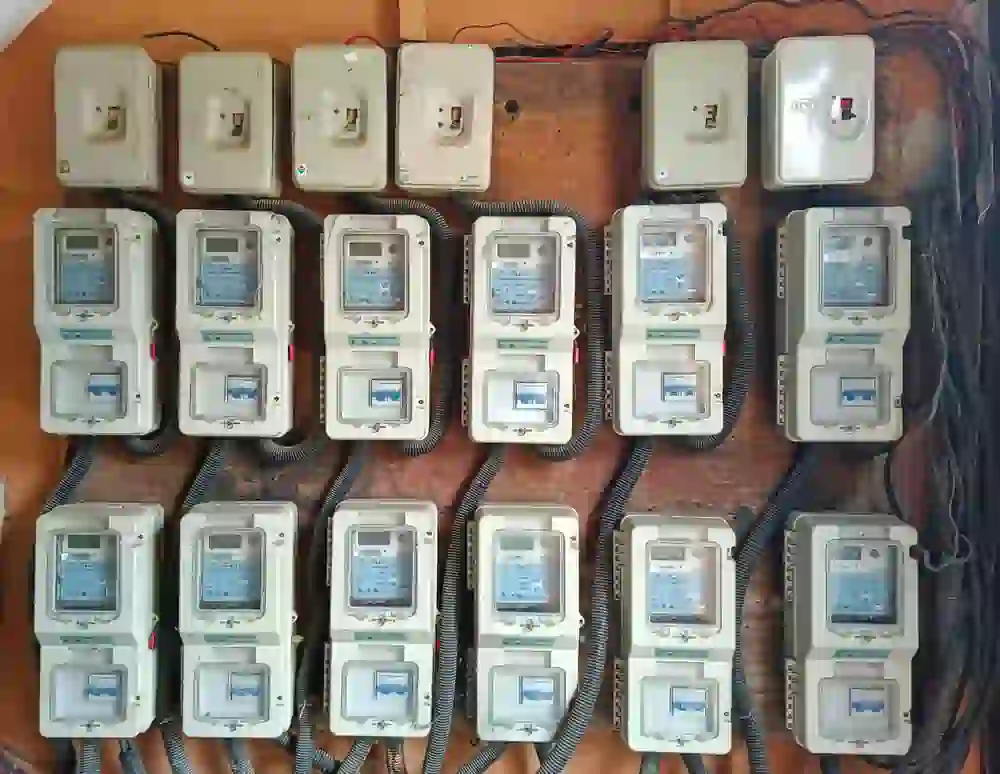
The Federal Government is shifting strategy in its drive to end estimated electricity billing, unveiling a new option that allows Nigerians to pay for prepaid meters upfront and recover their money through energy credits.
The initiative, announced by the Nigerian Electricity Regulatory Commission (NERC), is designed as an alternative for consumers unwilling to wait for free meters under ongoing federal and World Bank-backed programmes.
A Faster Route to Metering
Under the arrangement, customers can acquire meters through the Meter Asset Provider (MAP) scheme and receive refunds gradually as energy credits. According to NERC Commissioner for Corporate Services, Nathan Shatti, the model gives households and businesses immediate access to metering while broader government interventions continue.
Officials say the approach is part of efforts to narrow Nigeria’s longstanding metering gap, improve billing transparency and ultimately eliminate estimated charges that have sparked complaints nationwide.
Billions Committed to Close Metering Gap
The policy complements the Presidential Metering Initiative (PMI), under which the Federal Government earmarked ₦700 billion to deliver 2.5 million prepaid and distribution transformer meters. Authorities disclosed that 42 Local Meter Manufacturers and Assemblers have been engaged to supply 750,000 meters within 15 months.
The PMI also includes plans to train 5,000 installers in collaboration with the National Power Training Institute of Nigeria (NAPTIN), aimed at strengthening technical capacity across the sector.
Parallel to this is the World Bank-supported Distribution Sector Recovery Programme (DISREP), targeting 3.2 million meters. So far, 645,000 meters have reportedly been delivered to electricity distribution companies (DisCos), with over 117,000 installed.
Refund Figures and Consumer Uptake
Through the MAP window, about ₦25 billion was paid by 2.5 million customers seeking meters. NERC disclosed that ₦20 billion has already been refunded via energy credits, benefiting roughly 2.1 million consumers.
In addition, the Meter Acquisition Fund (MAF), introduced in 2023, has disbursed ₦46 billion across two tranches, supporting hundreds of thousands of meter installations nationwide.
Bigger Picture
With multiple funding streams now running simultaneously — PMI, DISREP, MAF, and MAP — regulators say the goal is clear: accelerate meter rollout, restore consumer confidence, and reduce disputes between DisCos and customers.
For many Nigerians frustrated by estimated billing, the new pay-now, get-credited option may offer a quicker path to accurate electricity charges — even as the government works to scale free meter distribution nationwide.