
If you are a skilled artisan in Nigeria or you work in hands-on trades like tailoring, welding, carpentry, fibre installation, electrical work, plumbing, or hairdressing, then this is something you should really pay attention to because it is not just another announcement. It is one of those programmes that can change how you see your work and how far you can go with it.
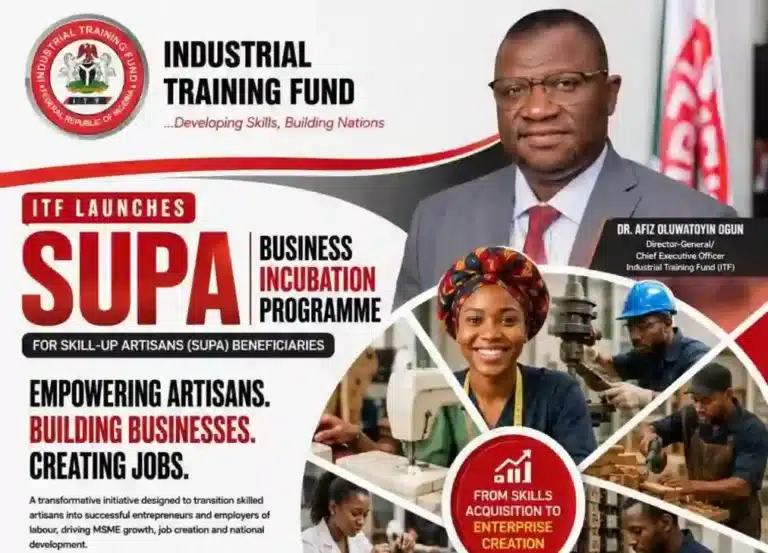
The Industrial Training Fund (ITF) Industrial Training Fund has introduced a programme called the ITF SUPA Business Incubation Programme, and the main idea is very simple. It is not just about teaching you technical skills again, it is about helping you turn the skills you already have into a real business that can grow, hire other people, and survive long term.
This programme is mainly connected to the Skill-Up Artisans (SUPA) initiative, so if you are already part of SUPA or you are planning to join, then this is basically the business development stage of that journey. It is where you stop being only a technician and start thinking like a business owner.
If you are wondering who exactly this is for, it is for artisans who are already active in their trade and are ready to move beyond just daily survival jobs. It is not for people who are still completely undecided or just testing the idea of learning a skill. This is for people who already have a craft and want to build something structured from it.
Now, let’s be honest about something many artisans face. You can be very good at your work, have steady customers, and still struggle financially because your work is not structured like a business. You are just operating day to day. This programme is trying to fix that exact problem by helping you move from informal work into a proper business system.
The training under this programme is not just about technical improvement. It also includes entrepreneurship training, where you learn how to manage customers, handle money properly, understand pricing, and structure your work in a way that brings growth instead of just survival. It also uses structured methods like business development frameworks that help you build step by step instead of guessing your way through.
One of the strongest parts of the programme is mentorship. You are not left alone to figure everything out. You get guidance from experienced people who understand how businesses grow. They help you correct mistakes early, avoid common failures, and focus on what actually works in real business environments.
Another important part is formalisation support. Many artisans in Nigeria operate informally, meaning they don’t have proper business registration or structure. This programme helps you move into a more recognised system where your business can be taken more seriously, especially when dealing with bigger clients or opportunities.
There is also equipment support involved, but it is important you understand this clearly. It is not a free giveaway. It works on a structured repayment arrangement. What this means is that you get access to tools or equipment that can help you grow your work, but you are also expected to take responsibility and pay back according to the agreed structure. The idea is to help you grow without making you dependent.
The programme also includes long-term monitoring for up to five years. That might sound long, but it simply means they are interested in whether your business actually survives and grows after the training. They will track things like business growth, job creation, and how well participants are performing over time.
According to the Director-General of ITF, Dr. Afiz Oluwatoyin Ogun, the goal is not just to train artisans, but to help them become employers of labour. In simple terms, it means they want you to reach a point where you are no longer just working alone, but you are creating jobs for others and building something bigger than yourself.
Now, if you are thinking about what this means for you personally, it is a shift in mindset. It means your skill is no longer just something you use to survive daily life. It becomes something you can build a business around, scale, and even pass on to others.
To apply or participate, artisans are usually expected to come through the SUPA framework, and updates are typically shared through official ITF channels or designated registration processes. Because programmes like this often roll out in phases, it is important to stay alert to official announcements from ITF rather than relying on random sources.
If you are serious about it, the first step is to make sure you are already active in your trade and ready to grow beyond just small daily jobs. The second step is to follow official updates and prepare your business mindset, because opportunities like this usually go to people who are ready to take action quickly when they open fully.
At the end of the day, what ITF is trying to do here is very clear. They are not just training people to remain workers. They are trying to turn skilled artisans into structured business owners who can grow, employ others, and contribute more meaningfully to the economy.
So if you are in this category, this is one of those moments where you should start thinking differently. Your skill is not just a way to earn today, it can also be the foundation of a real business tomorrow if you position yourself correctly.