
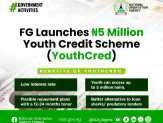
As interest in the Federal Government’s Youth Credit Scheme (YouthCred) continues to grow, many Nigerian youths are asking a critical question:
“What if I don’t pay back the loan?”
This concern is understandable, especially considering the negative experiences many Nigerians have had with private loan apps. However, YouthCred is not a typical loan app, and the structure of the loan makes defaulting extremely difficult.
In this article, we explain exactly what happens if you fail to repay the YouthCred loan, why repayment is unavoidable, and what you should consider before applying. Is the N5 million YouthCred loan really tax-free, and how long do I have to repay it? Find out here.
Why You Cannot Escape Repaying the YouthCred Loan
The YouthCred loan is backed by the Federal Government of Nigeria through the Nigerian Consumer Credit Corporation (CREDICORP). Unlike informal or unregulated lenders, this loan is integrated into Nigeria’s formal financial and identity systems.
This means:
- Your Bank Verification Number (BVN)
- Your National Identification Number (NIN)
- Your bank accounts
- Your credit profile
are all linked to the loan.
Because of this structure, there is no need for loan recovery agents to chase you, send messages, or embarrass you online. Repayment is enforced automatically through Nigeria’s financial system.
Automatic Deductions From Your Bank Accounts
If you default on repayment, the system allows deductions from any money that enters your bank accounts. It does not matter which bank you use.
Once funds hit your account, deductions can occur until the outstanding loan balance is recovered.
This is why it is strongly advised that you only take a loan amount you can comfortably repay.
Understanding GSI (Global Standing Instruction)
One of the most important enforcement tools is GSI – Global Standing Instruction.
What is GSI?
GSI is a banking framework in Nigeria that allows lenders to recover outstanding loans from all bank accounts linked to a borrower’s BVN, without needing further consent.
What Happens When GSI Is Triggered?
If you fail to meet your repayment obligations:
- GSI may be activated against your BVN
- Any inflow into any of your bank accounts can be automatically debited
- Recovery happens silently and systematically
Many Nigerians who took COVID-19 intervention loans can confirm this. When repayments were ignored, GSI was triggered and funds were automatically deducted from their accounts.
Other Consequences of Not Repaying the YouthCred Loan
Beyond automatic deductions, defaulting comes with long-term consequences:
1. BVN Blacklisting
Your BVN may be flagged, making financial activities more difficult.
2. Reduced Credit Score
Your credit score will drop significantly, affecting your ability to access future loans.
3. Loan Ineligibility
You may be blocked from accessing government or institutional loans in the future.
4. Financial Restrictions
Certain financial services may become unavailable or delayed due to your credit status.
YouthCred Interest Rate and Repayment Structure
Many applicants are focused on the interest rate, and rightly so.
Here are the key details:
- Interest rate: Approximately 2% of the loan amount
- Repayment period: 12 to 24 months
- Repayment method: Automatic monthly deductions from salary
- Target audience: Gainfully employed Nigerian youths (18–39 years)
With a long repayment window and a relatively low interest rate, the loan is designed to be affordable and sustainable.
Final Advice Before You Apply
YouthCred is a genuine opportunity for Nigerian youths to access affordable credit and build a formal credit history. However, it is not free money.
Before applying:
- Calculate your monthly repayment ability
- Borrow only what you can repay comfortably
- Treat it as a formal financial obligation
The system is built in such a way that repayment is unavoidable.
Taking the loan responsibly protects your financial future and keeps you eligible for bigger opportunities ahead.